
Drugged Driving
Drugged Driving Is Not an Accident, It Is a Choice!
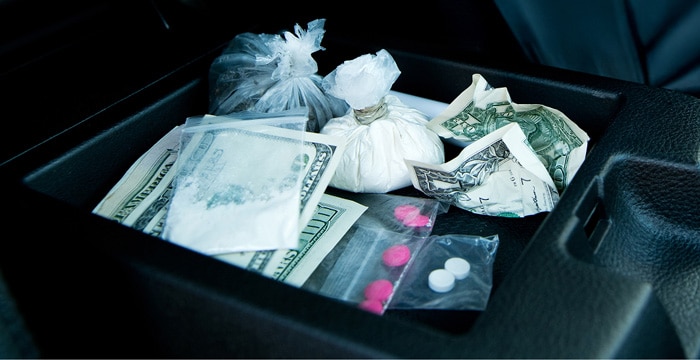
On January 23, 2008, 20-year-old Hedaia Madi Carlson and her unborn daughter, Madelynn Nichole, were killed by a drugged driver in Virginia. Because of lax drugged driving laws, the driver was only charged with reckless driving.
Even though he had marijuana in his possession at the time of the crash.
Even though he tested positive for marijuana.

In spite of the evidence, he was back on the streets in no time. Meanwhile, Carlson’s family planned her and her unborn child’s funeral instead of a baby shower.
Because this criminal was drugged, he never had to answer for his crimes. It doesn’t make any sense. Everybody knows the horrific realities of drunk driving. However, when it comes to the deadly crime of drugged driving (DUID), we as a society are in major denial.
The notion that “it’s ok to drive drugged” is alarmingly widespread. The simple truth is that it’s never ok to drive drugged — even if the drugs are legal. After all, alcohol is legal, and yet we have harsh drunk driving sanctions in all fifty states. Just because prescription drugs and marijuana are legal doesn’t mean they don’t impair a person’s ability to drive. Quite the contrary — innocent lives are lost every day as a result of crimes committed by drivers high on legal drugs. Of course, it makes little difference to victims whether their perpetrators are high on legal drugs, illegal drugs, or both drugs and alcohol.
Marijuana
While most people do not believe that driving on marijuana is “not much of a problem,” a significant minority of people, particularly cannabis users, underestimate the risks associated with driving while impaired by marijuana. This perception contrasts with scientific evidence which confirms that marijuana use impairs driving abilities.
A 2023 AAA Foundation for Traffic Safety survey found that 94% of people say driving while over the legal blood alcohol concentration (BAC) limit is very or extremely dangerous, but only 70% believe it is dangerous to drive within an hour of consuming cannabis. Some people even think that cannabis use improves their driving. But research confirms that cannabis directly affects the parts of the brain responsible for attention, decision-making, coordination, and reaction time, which are all critical for safe driving. (Governors Highway Safety Association)
Specific effects of marijuana on driving:
- Slower reaction time: Marijuana can slow down the time it takes to react to situations, which is crucial for safe driving.
- Impaired judgment: Marijuana can affect decision-making, making it harder to assess risks and react appropriately while driving.
- Reduced coordination: The ability to coordinate hand-eye movements and body movements can be impaired, making it difficult to control the car and navigate safely.
- Distorted perception of time and distance: Marijuana can alter the way a driver perceives time and distance, leading to misjudgments about speed and spacing.
- Reduced attention and focus: Marijuana can make it harder to maintain attention and focus on the road, increasing the risk of missing important cues.
- Increased risk of lane weaving and erratic driving: Studies have shown that drivers under the influence of marijuana tend to weave in and out of lanes more often and exhibit more erratic driving behavior.
Driving under the influence of marijuana is illegal and dangerous, even in states where recreational marijuana is legal. It’s important to wait until the effects of marijuana have worn off before driving. The National Highway Traffic Safety Administration (NHTSA) states that driving under the influence of marijuana is illegal everywhere.
Our partner, DUID Victim Voices, has published several insightful blogs on marijuana and driving. These writings align with our core beliefs on the matter.
Prescription Drugs
The popular opinion about driving under the influence of prescription drugs is just as skewed. While only one in four people see it as a serious threat, prescription drugs were found in 46.5% of drugged drivers involved in fatal crashes. Prescription drugs can create significant problems for drivers by causing side effects that impair the physical and mental abilities needed for safe driving. Driving while impaired by medication, even if legally prescribed, can result in a DUI charge.
Illegal Drugs
When it comes to illegal drugs, it seems simple: They’re illegal to use in the first place, so it’s definitely not okay to drive after using them. The 2021 National Survey on Drug Use and Health (NSDUH) reported that 13.5 million individuals aged 16 and older drove under the influence of alcohol in the past year, while 11.7 million drove after using illicit drugs, including marijuana. Because use of illegal drugs is on the rise, there is also an increase in drivers under the influence of heroin, meth, cocaine, and other substances that contribute to deaths on our roadways.
The Facts on Drugged Driving
- Drugged driving is a significant and growing safety hazard involving operating a vehicle while impaired by illicit drugs, prescription medications, or even over-the-counter medicines. It is illegal in all 50 states and poses a serious risk to all road users.
- Nearly 44% of drivers in fatal car crashes with known results in 2016 tested positive for drugs. More than half of those drivers had more than one drug in their system.
- After alcohol, marijuana is the most frequently found drug in the blood of drivers involved in crashes.
- Impairment Effects
- Different drugs affect driving skills differently:
- Marijuana slows reaction time, impairs judgment of time and distance, and decreases coordination.
- Opioids and sedatives can cause drowsiness, dizziness, and impair thinking and judgment.
- Cocaine or methamphetamines can lead to aggressive and reckless driving behaviors.
- Polysubstance Use: Combining multiple drugs (including alcohol) amplifies the impairing effects and significantly increases crash risk.
- Public Perception Gap: A 2023 survey found that while 94% of people think drunk driving is very dangerous, only 70% believe the same about driving within an hour of consuming cannabis, a dangerous misconception.
- Vulnerable Populations: Teens and young adults are especially at risk due to a lack of driving experience combined with a higher likelihood of drug use.
Why Isn't More Being Done About Drugged Driving?
More isn’t being done about drugged driving primarily because of significant scientific, legal, and enforcement challenges that do not exist to the same degree as drunk driving. Unlike alcohol, there is no simple, standardized roadside test like a breathalyzer to measure drug impairment accurately at the time of a traffic stop.
Key Challenges in Addressing Drugged Driving:
- Lack of a Standardized Test for Impairment: A crucial difference from alcohol is the absence of a universally accepted concentration limit (like the 0.08 BAC legal limit for alcohol) to define drug impairment. Drugs affect individuals differently and can stay in a person’s system long after the intoxicating effects have worn off, making it difficult to prove a driver was impaired at the specific time of an incident.
- Detection Difficulties: The wide variety of impairing substances (illicit drugs, prescription medications, and over-the-counter drugs) makes a single detection method impossible. Traditional field sobriety tests used for alcohol are often not sufficient for identifying drug impairment, and specialized training for officers to become Drug Recognition Experts (DREs) is not universally required or widespread.
- Prosecution Complexity: Proving a driver was impaired by drugs beyond a reasonable doubt is challenging in court. Prosecutors face difficulties with toxicology reports because the mere presence of a drug does not equate to impairment, and defense attorneys can question the reliability of observational evidence and testing procedures.
- Data and Underreporting: Drugged driving incidents are often underreported. If a driver fails an alcohol test, police usually stop there and do not test for drugs, leading to incomplete data on the scope of the multisubstance impaired driving problem.
- Public Education: Public education campaigns have made drunk driving socially unacceptable over decades, but a similar level of stigma regarding the dangers of driving under the influence of drugs (including prescription medications) is still developing.
- Legal Variability: Laws and enforcement protocols for drugged driving vary significantly from state to state, lacking the national uniformity found with drunk driving laws.
While efforts are underway to improve detection methods, such as developing oral fluid tests and increasing DRE training, these solutions are not as established or widespread as alcohol testing protocols.
What Can You Do About Drugged Driving?
Whatever form it takes, drugged driving is a major danger. We need to do more, and that includes making tests available for law enforcement that can be performed at the roadside. We also need to make drugged driving socially unacceptable. That is where you come in.
- If you’re taking a prescription, check with your doctor or pharmacist to make sure it’s ok to drive. If you want to know if your prescriptions are impairing your ability to drive, you can find out here thanks to Triple AAA.
- If you suspect a friend has just smoked marijuana, don’t let them get behind the wheel.
- Arrange for alternate transportation whenever there is a potentially impaired driver.
- Write your legislator and tell them you want them to take a strong stance against drugged driving.
- Tweet all your friends that you think driving drugged is dumb with the hashtag #dontdrivedumb.
- Let your friends know on Facebook that you will not ride with anyone you suspect is driving drugged.
- Share WeSaveLives.org with your friends, family members, and loved ones, as well as on your social media.
- Keep a designated sober driver plan. Before going out, make sure someone in your group is committed to staying sober and getting everyone home safely.
- Take someone’s keys if possible. If a friend is about to drive impaired, step in, hold onto their keys, and help them find a safe way home. A small action can prevent a life-changing crash.
These are simple yet powerful ways to help save lives!